Donation Trauma – Is it a thing?

Without collecting and selection, the role of an archivist couldn’t exist. We are the modern-day hunter gatherers, seeking out historically valuable information and collecting it together in well organised groups for us to look after forever more. But how much thought do we really give to those handing their treasures over to us, and what impact does this transaction have on them? I think about this in more depth in this post.
Whether it’s creating a brand-new collection, or adding to an already established one, collecting is a core role of the archivist. Knowing where to look to find the records that tell the stories that need to be told is a skill built up over time. However, it’s a task that comes with many pitfalls and is problematic in a range of ways. How do we decide what is important? How do we know what story is the most important to tell? We know that we can’t collect everything, but although our role is to curate content, how do we know we’re saving the right things? Across the archive sector, what is kept depends largely on who is in charge of the collection and even though policies and processes are in place to help guide decisions, there is no real standardisation and opinions are what decide the value and therefore the fate of a record.

Sometimes this can lead to us being offered collections that don’t fit with our collecting policy, or would be better placed with another organisation, or even in some cases may not have the value that the potential donor thinks it does. We’re well versed in how to deal with this. Empathy and compassion are under valued skills of the archive profession in general. But do we apply this thought process to those we accept collections from? I’m not sure we always do.

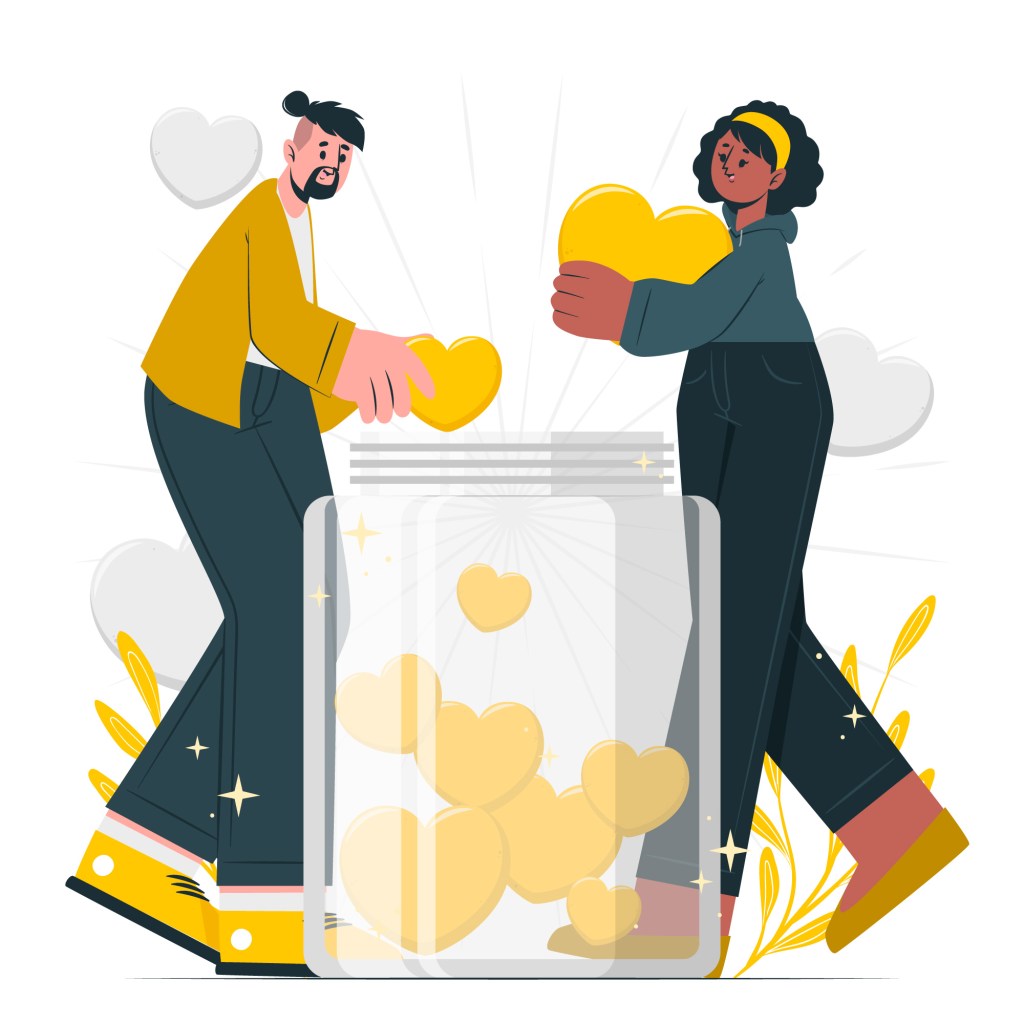
A lot of our records come from community groups who have been building up collections as a labour of love for many years. Even some individuals have collected valuable records and have decided to donate them so ensure they survive long term. However, in our excitement to fill the gaps in our holdings, do we always acknowledge how difficult this decision could have been? Or the reasons it has been made? Having worked in the sector for so long, I’ve formed strong emotional attachments to the collections in my care, even when I wasn’t the collector, so having to give up the records which have played such an important roll in your life can, in some cases, be really difficult. To be handed paperwork that feels like signing your life away by an over excited archivist who keeps talking about the gaps that’s been filled or the importance of the collection will likely not make this easier.

Large group of people different silhouette crowded together in heart shape isolated on white background. Vector illustration

Trauma has become an important word across the sector in recent years, particularly in reference to trauma informed practice and the emotional trauma that archivists can go through dealing with records with difficult subject matter. This in an important part of the work we do and needs to be explored more to ensure we feel able to do our jobs every day. But we do also need to be mindful of the impact we can have on others and be prepared to act with compassion when needed. Even if inside, we are doing cartwheels about the amazing stuff being donated. Allowing free access to donated collections can also help ease this transition. Donators should be welcomed to work on the collections they have contributed, or just be able to look at them whenever opening hours facilitate this. No one will know more than them about their collections and cultivating these relationships can only bring us benefits.

I think the previous blogs about working with community archives inform this post as well. Communication skills have never been more important in our role, and we should always take a minute to think about the task we are doing and how it may affect the people we are working with. This can only ever be a good thing.   

Lets Get Digital – Or Should We?

Let’s get Digital! – Or should we?

Previous blogs talked about the ever-changing archive sector and no change has had a more dramatic impact than the development of technology and the establishment of digital archive work. Digital Preservation very quickly became another millstone around the neck of archivists along with the acquisition, appraisal, cataloguing, conservation, access, promotion, advocacy, research and any tasks as appropriate work we were already doing. But should this be the case? Has it got to the point that digital preservation (and maybe other aspects of digital work) has become so large that specific roles should be created to carry out this work? Should digital preservation be its own sector completely? That’s the topic of the musings in this blog.

The unofficial start of the digital preservation sector can be traced to a conference on metadata in 2000. Even then, the scale of the problem was well known. Digital records are created at a far faster pace than physical records due to ease of use. But as archivists, our role is to preserve, so we turned ourselves to the challenge, only to find preserving digital records was not the same as physical records and a far higher degree of technical knowledge was needed than was taught. The context in which digital preservation takes place was also far more complex than in the physical world and knowledge was required of anti-virus, cyber security, software systems, file formats and a raft of other topics before digital preservation could even be thought about.

It is definitely true that many archivists have risen to this challenge. Many have moved into digital archivist roles and completed the training to specialise in preserving digital records. However, many have struggled with turning their hand to the digital world. In particular those in lone archivist roles with responsibility for both physical and digital records have struggled as it’s physical impossible to do all the work involved in preserving an organisations entire record estate on your own, and that’s before you factor in the training element involved in keeping your skillset up to date.

It becomes clear that the roles are quite different in scope when comparing the competency frameworks of the sector organisations. The Digital Preservation Coalition created a fully comprehensive framework of digital preservation skills linked to role definitions which helps track skill building and career progression in the digital field. The Archive and Records Association have included digital preservation in their framework but it is as an add on optional skill that archivists can choose to ignore or develop as they see fit.

It is this problem that makes me think that the roles should be separated, and digital preservation should be given a place as its own sector with it’s own roles, pay scales and tasks. This is not to say that digital archivists shouldn’t exist, but in my mind their role should be far more defined than is currently the case. Taking the example of larger, well-funded organisations with good staff resource, many of them employ digital preservation specialists, as well as digital archivists. In some cases, software engineers are also employed as the technical requirements are far outside the scope of an archivist role. This makes the role of the archivist easier as they can focus on the preservation aspect of the role that they were hired to do with confidence that the technical side of the role is being covered by a specialist.

Preservation is complex no matter what the medium, and in the physical record world we have conservators who carry out the specialist technical work to ensure records are repaired as needed and conserved in order to last for generations. Why should this be any different in the digital world? Archivists have a strong specific skillset, which, although not complicated, took time and effort to build, and while continued professional development is important, it shouldn’t mean having to learn an entirely new role that we weren’t prepared for and didn’t really want to do in the first place. There is a huge market for digital preservation skills across the heritage sector, but do they need to come from archivists, who already do so much with their day?

Making connections and finding communities – The right conversations 

I don’t think that making connections is a contentious subject for a blog post, but I do think it’s a really important one. As I mentioned in previous posts, I believe that the role of the archivist is changing, and I think this involves a more focused approach to collecting. For some time now the sector has been talking about addressing gaps in collections, but how do we go about finding the communities that represent those gaps; and even more importantly, how do we have the right conversations that encourages collaboration with us in a way that is fair. That’s the subject of this blog post.  

Illustration of business people

Although collecting has always been an important part of archive work, there hasn’t always been a targeted focus on what should be collected and what shouldn’t. Recent archive sector research has discussed the gaps in our collections and archives across the world are working to fill these and provide better representation to as many people and groups as possible. However, communities have also been doing this work, noticing the gaps in their own stories and working to fill them without institutional help. It could be argued that this is a factor in the increase in community archive work we have seen in the last few years.  

There is an argument that if communities are doing this work themselves, why are archive organisations getting involved? Communities are best placed to tell their story and collect what they know to be the essential records for doing this and archives don’t need to be involved. For me, there is an element of truth to this. However, it is also true that community groups and archives are particularly under funded and under resourced and this for me is the main reason for the wider archive sector to get involved. Collaboration is always the key to success for me and I think we can do a lot more together than we can apart. However, the trust needs to be there and at the moment that is definitely not always the case.  

Business success concept on wooden background high angle view. hands protecting wooden figures of people.

As previously mentioned, community archives are wary of engaging with institutions, seeing them as gatekeepers which will keep them from their own records and store them for years without doing any work to make them accessible. This is generally due to lack of fund on the part of the institution but this is largely irrelevant to the group who have worked so hard to pull a collection together and feel really passionate about it’s topic. Approaching community groups is also challenging because, just like archives, no two are the same. Some have a wealth of archive knowledge and training programmes to help spread this throughout their teams. Some are individuals with true passion for the items they collect but no real understanding of the good practice required to preserve them long term. This is a particular problem with digital records, where storage is regularly confused for preservation and access via a website is a common form of ‘preserving’ records. 

So, what do we do? I would suggest we approach these groups ready to learn. Make it clear that we are interested in what they’ve been doing and are keen to help, but most importantly, help within their context. We are not the saviours of these collections as they have already been saved, but we can help with advice and guidance on what happens next. Offering collaboration over collections deposit for me is a good thing. If these collections can be preserved to the standards required for long term preservation within the community, then we should be facilitating that and helping to facilitate access and promotion rather than suggesting removal of the collection for cataloguing. Having a list of resources on hand will be a huge help in this work. 

Illustration of speech bubbles

It’s also important to show actual interest in the communities we want to connect with. Go to their events, have conversations about things other than archives and forge a connection that’s about more than work. I think if we can do this, we are a good way down the path of collaboration. Working together, for me, is the key to all archive work, and this includes working with other archivists and record practitioners. There is a wealth of hugely successful projects and work in this area already and learning from those who have done or are already doing it will really help improve our own practice. Let’s work together and move the sector forward in a new way that benefits us all and makes more collections accessible in new ways. It all starts with a conversation… 

Archives, Archivists, and Storytelling

From a personal perspective, this blog is quite a difficult one to write. Before I begin, I don’t think this is a black and white issue, but it’s been something that’s been percolating in my mind for a long time, so I thought it appropriate to bring it up here.

One of the key components of archives is their role in storytelling. Some of the best stories in the world are held in archives and with the digital technology sphere growing and expanding what feels like daily, there is a wealth of ways these stories can now be expressed, interpreted and told.

And when I qualified it was one of the aspects of the job that I was most looking forward to doing. I liked the idea of being able to research a collection I had just catalogued for the nuggets of interesting information I could share with the world. Every archive course across the UK includes an element of outreach and advocacy and the Explore Your Archive Campaign encourages us to tell the stories in our collections and show the world our treasures through the medium of storytelling. However, in the last 5 to 10 years, this has become problematic for me for several reasons.

Firstly, in every institution I’ve worked in, promotion of the collections has taken priority over the actual work I was hired to do – namely catalogue a collection and make it accessible. In project cataloguing roles I’ve been told to include less description or only catalogue to series level to ensure that time remains at the end of the project for promotion, whether that be online or via exhibitions. It never made sense to me how I could promote a collection well when I wasn’t entirely sure what was in it; and my title was project cataloguing archivist in some cases – Surely, I was hired to catalogue. The sector seems to me to have forgotten that the best way to promote a collection is a well laid out detailed catalogue that users can access, understand and interpret according to their research needs. In my mind what we should actually be promoting is the archive itself, the work being done and why it’s so important. We should be a gateway for discovery, not gate keeping what we think the most important and interesting parts of our collections are.

Secondly, the world has changed so much since I qualified that it’s changed the role (and in some ways perceptions) of the archive and the archivist too. The focus used to be on the collections held that were hundreds of years old, preserving them and telling the stories contained within them. I think this is still a core part of the job, but it’s been joined by a sharper focus on modern collecting. Having learnt from the gaps that exist in these older collections, archivists are now focused on making sure we collect a full representation of the world around us and that no voice is forgotten or left behind. This is a huge step forward and should continue as there is still improvement to be made in this area. However, in many cases, we still cling onto the notion that we are the best people to tell the stories held in modern collections and I believe we need to analyse this feeling. With modern collecting, many of the record subjects are still alive, and although our collecting will ensure they have a voice in the future – they still have their own voice now. With community archives, whole communities still exist which lived the truth described in the records we hold, and no one is more qualified to tell that story then them.

Perhaps with these collections, our role should be to facilitate storytelling, to make the collections easily searchable and accessible so the people who can see themselves within it are encouraged to use it and tell their story. Yes, exhibitions around collections from hundreds of years ago still have a place but are there scholars of the period who could interpret the records in a new way, or someone with ancestors from that period that has a particular link they could share. Oral histories can be collected and added to the collection to enrich it and create a range of perspectives for those who look at the collection many years from now. Surely that is the role of the archivist? To leave the most accessible, representative collections that we can for the future? Our advocacy work should focus on this and why the work we do is so important.

This is where the true value of the Explore Your Archive Campaign comes in. We shouldn’t be telling people what we think they should be interested in, or promoting the records that are our favourite from the collections. We should be saying this is what we do and this is why it matters and without it you wouldn’t have records like these. But there is no point in pointing out records which are only accessible via online exhibition because the catalogue was badly completed.

So for me, I’ve hung up my storytelling coat. I want to focus on making collections available for others to tell their own story. I was to help give a voice to those who may feel they’ve been forgotten and the last thing I want to do is gatekeep that experience. In the future, if where I’m working has no collections backlog (does anyone have this? Will we ever have this?) then research would be a nice to do job. But until then, advocacy and storytelling will remain separate. It’s not that I won’t promote what the archive I work in has, but it will be through a lense of archivist and not storyteller – because I’m an archivist and that’s what I am and I’m still very proud to be one.

What an Archive is – and what it isn’t

Following on from my what is an archivist blog, I thought it might be useful to think about what an archive is, and also what it isn’t. Traditionally, archives have been intrinsically linked with tangibility and historical importance, but some events I have attended recently have discussed the archive in a wider context and played with the definition in a way which not only confused, but also irritated me. So, I decided to attempt to unpack these feelings a bit more and see if I’m justified in feeling this way or if I need to open up my own definitions.

For me, the traditional meaning of archives is (was?) twofold. One, the building or repository where the physical or digital collections are stored and can be retrieved for access. I haven’t seen this side of the definition changed or challenged (always happy to be corrected), and two, the actual items that are being collected, preserved and retrieved for access from this building or repository. For me, the two are forever linked and cannot be separated and this is what keeps order in my archive world. I don’t attribute any physical descriptions or formats to these items as collections can contain anything, (just see the twitter post about locks of hair and other such interesting items for confirmation), but I do believe that for something to be an archive it needs to be collected in some way and the main reason for this is that I believe a central component of archives is  for them to be accessed. If you can’t create access to it in some way, I really strongly believe that it’s not an archive and stretching the term only adds confusion to an already confused sector that struggles to define itself at the best of times. I also think by its nature, an archive needs to be unchanging and will therefore have some evidentiary value, even just to confirm that something existed, or something was said. If we don’t have this stability and trust, we don’t have archives.

However, recent discussions I’ve heard, taken part in or read, state that the purpose of an archive is to replicate a memory or an experience and for this reason, ANYTHING can be an archive. Arguments that the body (or certain parts of it, like the brain, or sexual organs) are an archive due to the experiences they have and the memories they create. Individuals’ homes are archives, for the same reason and recently on the listserv, the term ‘artchive’ was used to refer to works of art as archives. At a talk I attended a few months ago, an activist turned archivist made the claim that anything that can create a memory can be an archive.  This need to turn everything around us into an archive baffles me. Archivists have accepted that we cannot collect everything and to try would be a huge waste of time and resource. This is why appraisal exists – it is absolute necessity and statements like the above only serve to make our role more complex than it already is.

There is a huge amount of discourse and research around the idea of archives and memory and I’m not going to discuss any of that here or I’d be writing a book. But I will say that I think the notion that archives are there to replicate or create past events that archive users did not attend is fundamentally wrong. Archives can be used in a range of ways to encourage memories from people who were there or provide a small glimpse into what the past may have been like for those accessing the archive in some cases hundred of years later, but the idea that we should be aiming to recreate these experiences make very little sense to me. I want to use archives to learn about the past and see why things happened or why people involved felt the way we did. I want to know what other people experienced and why it’s different to what I experience now. This is why an archive needs to be something that can be collected. A person (or part of them) cannot be an archive because they cannot be collected, preserved and accessed in perpetuity by anyone who wants to – and neither should they be. The importance of archives in storytelling, accessing small parts of the past and learning from those who have gone before is what makes archives so unique. We don’t need to keep adding to the term to make it count- it’s already one of the most important terms there is and our role is to highlight that by continuing to collect, preserve and facilitate access.

I did a lot of soul searching for this blog as I wanted to make sure that I wasn’t just stuck in the past and determined not to learn and grow in this area. I also tried to compare it to other sectors and what would happen if this logic were to be applied there. The best I could come up with is a lawyer presenting evidence to a court. Evidence needs to be concrete to support the case being made. In fact, in many cases archives are used for this exact purpose because they are unchanging and held in such a way that they can’t be altered. Using the above logic, a defendant could claim that their body is evidence as they were there and experienced the situation. It wouldn’t be accepted because there is no evidence of the fact that body was there. The body, to me, cannot be an archive for similar reasons.

Team discussing bookkeeping report, working late at night at bureaucracy record in storage room. Diverse depository workers analyzing administrative documents, discovering accountancy files

I don’t think it is the job of the archive to create memories around the content they hold and facilitate. Yes, memories can be made about interactions with records and experiences can be had in an archive when using the material, but that for me is where the facilitation start sand ends. I tried to open my mind for this blog and think theoretically but for this particular question, I found it really unhelpful and confusing, and my conclusion is I’m going to stick my previous definitions – if only so the sector that I love still continues to make sense to me.

I would be keen to hear from anyone who thinks the opposite as me. Either on here via the comments, or on social media via #UnAccessioned .

What is an Archivist?

This may seem like a strange place to start. Surely after working in the sector for around 20 years, I know what an archivist is? In the early stages of my career, I was certain that I knew what an archivist was and that I knew what my role would be wherever I worked and that was that. Since I qualified the sector has changed in so many ways and the range of roles that I’ve had has shown me that no archive is the same – so maybe no archivist is the same either. I also wonder if what we expect from ourselves is the same as what others expect from us. That’s why I thought it was worth taking a step back to look at what I know, what I think I know and what everyone else thinks.

Good old Wikipedia describes an archivist as, “… an information professional who assesses, collects, organizes, preserves, maintains control over, and provides access to records and archives determined to have long-term value.” The Oxford English Dictionary has a far more succinct definition stating, “(an archivist is) ​a person whose job is to develop and manage an archive”. When I qualified, these definitions agreed with my perception of the career I was signing up to. I wanted to collect, preserve and make available records to anyone who wanted to see them. As I started working in the sector, I realised that the actual tasks I was required to do to fulfil these wider remits varied hugely and I’ve done a bit of everything, from project management to bid writing, to social media promotion, exhibition creation and management, coding, graphic design… The list goes on and as I read back through that list, it makes me wonder when did archivist become shorthand for jack of all trades and master of none?

And I think we’ve done this to ourselves with a complete lack of ability to say no. and this is what’s lead to the confusion outside the sector around what we actually do what our role is and the value we bring to organisations, which is why we are constantly de-valued. The ever-expanding job descriptions that always end with “any other duties as required”, proves this further as they detail a long list of tasks outside the traditional scope of an archivist role, but a list of tasks that nonetheless we all need to show at least some proficiency in lest we remain unemployed. Our sector is unlike most in this regard. Lawyers aren’t asked to create adverts to promote their services, Doctor’s aren’t asked to design the logos for their practice or curate exhibitions about the work they do,  and accountants don’t need to know how the back end of the software they use works but archivists do, and in many cases this work is prioritised as more important as the preservation and arrangement work we thought we were being hired to do. It is problematic that we’re expected to promote what we have when the large majority of many collections remained uncatalogued and in extreme cases inaccessible. We’ve been so busy highlighting the ‘gems’ of our collections, we’ve forgotten to advocate for the cornerstone of the work we do. Our love of records has us saying yes to doing the work of 4 people and then wondering why we never seem to catalogue more collections with full descriptions for people to access. One hugely publicised collection does not make up for the hundreds of uncatalogued collections left behind.

Data archive organization, office documents and files storage. Vector hand drawn illustration of woman sorts and organizes papers. Icons of folders, digital information in computer and cloud

As archivists, I think for a long time we’ve believed that part of our job is to tell the stories found in the collections we hold. I don’t think this is the case anymore. We see this as a main component of outreach and advocacy, when the story we should actually be telling is that of the archive. Our role is to highlight why what we do is important and the importance of the collections we collect. This has become synonymous with telling the stories held in the collections that we maintain and preserve but they are not the same thing. I believe by continuing down this route the role of archivist is slowly morphing into that of researcher and curator, both incredibly important roles, but not officially our roles.

I think we need to get better at advocating for the collection, arrangement and access facilitation we became archivists to do. Yes, digital is changing the arena and more technical skills will be required but this is the same with every profession and I’m not saying that we shouldn’t be upskilling where we can. By convincing those in management roles that this work is essential and will provide an even larger pool of exciting content to curate from in the future, we will be doing the work we were hired to do while also securing the role of archivist as essential to a large range of organisations and institutions. If your place of work thinks what you are showcasing now is amazing, wait until they see what you can discover when you’re working on their unknown collections. Let’s be archivists – and showcase what we do best.

Do you agree? Did you become an archivist to do traditional archive work? Or do you think being an archivist involves learning parts of other sectors works to do our job well? Use #Unaccessioned on social platforms to discuss or comment below.